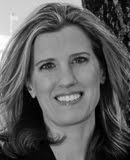
Joshua Weiner: You’ve been teaching courses at The Writer’s Center on and off for many years now. Why do you do it? You have a big time job directing the M.F.A. Program at University of Maryland, you’re busy working on new poems and essays, you’ve been travelling all over the place recently as Maryland State Poet Laureate…
Stanley Plumly: Well, I did it—taught at TWC—off and on for a while, years ago, but then stopped. But I came back to TWC for one reason, and that’s because Sunil Freeman [Assistant Director of TWC] was running it. But why teach on top of other teaching, there’s a slightly different answer to that. Teaching people at a place like TWC, that’s a very different situation than in a graduate workshop. In the graduate workshop, students have a strong need to talk, to critique each other’s work, to discuss the nuts and bolts of writing—they want to do it, and they have to do it, it’s the only way they learn. In a workshop of the kind I teach at TWC, that need is not driving the conversation. In the TWC workshop there’s a kind of freedom in how I talk about poems. We can range more widely, and other things can stream into what we’re talking about, and how we’re talking about it. They are not digressions, but tributaries that join the main course and current of poetry. It’s much more theoretical; it’s as if a certain obligation is taken away, it’s just a different kind of teaching situation. I can speculate and roam around in a way I’ve never been able to do in a graduate workshop.
I had a similar situation in New York, when I was teaching graduate workshops at Columbia, and then also at the Y.M.C.A. on 92ND Street. Louis Simpson said to me, ‘Stan, you know why you like teaching at the Y? Because you enjoy the company of grown-ups.’ And that’s true! Sometimes there’s also a younger person, someone who is preparing to go to graduate school, or someone who has recently finished, but still wants to be in that environment. What I do at the university is important to me, but there’s a richness of experience and point of view that I find in the TWC workshops that I don’t find elsewhere.
And we have so much work to do! I try to get through six to eight poems in a session, so it’s essentially a workshop-lecture; and frankly, I enjoy that so much more (laughs).
JW: Do you like to give exercises or assignments in these workshops?
SP: I don’t. But: I just had an experience this past summer at Kenyon College, where it’s a totally different situation for a summer workshop. Students write every day, and in response to a prompt, at the end of each class, for the next day. I hadn’t done that before, I’ve always resisted assignments. Perhaps out of a kind of arrogance, that if you needed the assignment, you shouldn’t be doing this. The real work is self-initiating, or should be. That’s the test. But there are many roads. And students there thrived. So, I might try that. What happens usually is that an individual will come up to you and say ‘I need help’ and then you can take something from their own work, a line, an image, an idea, and you can offer them that more isolated element as a self-prompting for the next poem—there’s something there to return to, to explore more. And I think that’s the most useful methodology.
JW: It sounds as if that’s something you do yourself in your own work…
SP: Oh, yes. I have a new book coming out in the spring, and I’d say there are two or three poems there that are poems I did not include in the Selected and have been completely rewritten. It turns out they were prompts. I thought they were poems (laughs). But it turns out they weren’t right. And I felt that I wanted to get them right, I didn’t want them to appear in that earlier incarnation.
JW: Well, this leads into my next question, which is about the role of reading—in the workshop and also in your own work as a poet.
SP: Well, in the workshop, I don’t use texts, necessarily, what I’ll do is add to the worksheet a poem or two from the pool out there, that’s appeared within the last year, often something that’s been in a magazine, just to see how students are going to look at that poem; and each of them takes that poem and talks about it, and that’s how we warm up, a kind of calisthenics, and we’ll talk about that poem in a kind of ‘new critical’ way, reading it very closely, and from there we’ll get into the worksheet with their poems. But at the same time, I’m always referring to what Eliot calls the ‘Tradition and the Individual Talent,’ always appealing to the past, which for those purposes in the workshop usually goes only as far back as the Romantics. Sometimes I do reach further back (my academic training is in the 18TH C., juvenalian satire, Pope and Swift). But you try to create a context in which poetry is alive in a simultaneous way, so it’s not just tradition in a linear sense, but tradition in some kind of universal sense.
JW: Almost spatial.
SP: Yes, exactly, I imagine it’s like we’re inside a globe.
JW: A planetarium.
SP: A planetarium, very good! All these different stars with different magnitudes that we’re looking at. And you’re testing the students’ reading. And they’re intimidated by the past, I think; if you make it seem contemporaneous—that a Wordsworth sonnet, or Keats’ sonnet to his brothers, is a poem that could have been written recently, and it feels that way, then they have a richer sense of what the language is, what its possibilities are.
And there are some poets who do know that. John Berryman is a poet who collapsed time entirely, stylistically as well as in terms of the content: “Mistress Bradstreet” and of course the Dream Songs, move throughout time, and play with it, pun on it.
JW: Seems like Joyce is the master behind that, that kind of dream space, where language and identity are in a state of continual change.
SP: Right. In a poet like Berryman, he’s such a great poet, because he’s changing, he evolves through time, but he’s informing himself through established forms. His sonnets, for example, the best of them are amazing, that they’re sonnets!
The diction in them is incredible. What he was after in the Dream Songs is essentially a sonnet, in the structure of them, but it’s a variation, an exploded sonnet!
JW: I find that the problem of structure is one of the things about poems that I can actually teach.
SP: Yes, take Lowell’s Notebook poems, for example—he has a similar feel to Berryman for form. And that’s also what’s marvelous about Bishop. What is her formal sense? In her later work, it looks like she’s writing verse paragraphs; they have a spontaneity, as if they have no sense of themselves as made objects. But you look at the rewrites, it’s amazing, how crafted, and how in a way almost labored those poems are. “One Art” is clearly an example of form re-doubling itself; she breaks every rule about writing the villanelle.
So, yes, I read, I re-read: a few of my contemporaries; and I do pay attention to some younger poets I know about. But something has happened, and I don’t know when it happened, when poets stopped being concerned about posterity. That if you mention the word immortality, it’d be like a joke, a presumption.
JW: Is it the influence of the New York School (O’Hara, Ashbery, Koch, Schuyler)?
SP: Well, all of those poets are very much interested in lasting; they’re fine poets, with clear formal integrity. Maybe it’s something about the computer that makes a certain use of language almost too floaty, like if the computer lost electricity and everything disappeared, it wouldn’t matter: oh, I’ll just write another one!
JW: It’s like a willful shrugging off of the burden of the past.
SP: It’s as if, with some younger poets, this feeling applies to everything in their lives. There’s a lack of belief in the future.
My idea of someone who doesn’t seem to give a damn, and yet who gives the greatest damn is Philip Larkin, and it’s in the form.
JW: ‘Books are a load of crap.’ Only after you’ve spent a life shelving them, as a librarian!…
SP: (laughs) Yes, he came at it from many sides (laughs).
JW: Larkin’s one of the great lyric poets of the postwar period, isn’t he? I say that as a kind of segue. The lyric poem is often thought of as being a kind of very intense personal expression of interior experience. And you’ve been identified as belonging quite strongly to that tradition of the extended lyric. But in your poems you seem open to all kinds of influences—other poems, for example, and visual art, the movies, political history, and also other people…
SP: It’s the stuff that sticks, that you can’t ignore, and it’s more than a feeling, it usually has a manifestation, often in a fact—I love an irresistible fact—a poem should have at least one fact in it, one that’s rare. I firmly believe in real toads in imaginary gardens; but emotionally you attach yourself to the language at that level where you hear the experience, you see it, and to me that’s where the writing gets to take on a certain authority. And I can hear it, I really believe strongly in what you’d call the music of the poem. That’s essential.
JW: How do you know when you have a real poem hooked on the end of your line?
SP: Well, you write yourself to that feeling, that place. Almost invariably where you think you’re going and what you think you have is not what you end up with, and you end up with something better. And that takes time. And you think you have it, and then a month later, six months later, ah! You make a little adjustment; and I believe firmly in the small adjustment as a big deal. I hope that doesn’t sound precious. I guess it’s the French Symbolist in me. I place absolute emphasis on what Coleridge calls the best words in their best order; but that’s fairly dry, you need the musical equivalent too—that’s where Keats lifts the writing to a different level, even from his own contemporaries. Wordsworth in The Prelude: there are so many passages that you fall asleep over; but when he gets it right in that incredible blank verse of his, that’s just amazing. And the complexity of the diction he uses—no one had used diction like that before—that elevates into poetry what in another context sounds awkward, off-kilter.
JW: It’s a kind of discovery or invention for all the English poetry that follows. I think of the expressive awkwardness in Hardy.
SP: Yes, they both understand that narrative is an argument, and argument is a narrative; that you’re going somewhere; that the volition of the poem is its drive, to go forward, whatever its versified quality is.
JW: Olson also believed in that kind of velocity. But he had a different way of talking about it: one insight being immediately superseded by another insight: that’s what you’re projecting.
SP: And he uses the field, the whole page, all that silence as part of the vocabulary of sound. It’s almost visual, the vocal presence. He’s a very underrated poet, I believe, but incredibly influential. He and Marianne Moore are the most underrated influential poets of their generations.
JW: People tend to think of Olson as a kind of secondary Poundian, but I think of him alongside Coleridge, the way he was interested in all kinds of knowledge, that mind he had for anthropology, and how it informs his sense of language and poetic form.
SP: And he wrote a great book in prose, Call Me Ishmael. And to write good prose, oddly enough, is one of the ultimate tests for a poet.
*

Stanley Plumly’s recent collection of poems, Old Heart, won the Los Angeles Times Book Prize and The Paterson Poetry Prize, and was a finalist for the National Book Award. Posthumous Keats: A Personal Biography, was runner-up for the PEN/Jacqueline Bograd Weld Award for Distinguished Biography. Plumly is a distinguished University Professor at University of Maryland. In 2009, he was appointed Poet Laureate of Maryland, and in 2010, he was elected to membership in the American Academy of Arts and Sciences. Plumly’s new book of poems, Orphan Hours, will appear in the spring of 2012.

Joshua Weiner is the author of two books of poetry, The World’s Room and From the Book of Giants; and he is the editor of a collection of critical essays, At the Barriers: On the Poetry of Thom Gunn. The recipient of a Whiting Foundation Writers Award and the Rome Prize, he teaches at University of Maryland, College Park, and lives in Washington, D.C.
Plumly and Weiner will read together at TWC on May 25, 2012 as part of our 35th Anniversary Reading Series. Mark your calendars!